Spin Smart, Stay Solvent: Bankroll Management Essentials for Roulette Enthusiasts
23 Apr 2026
Spin Smart, Stay Solvent: Bankroll Management Essentials for Roulette Enthusiasts
Understanding Bankroll Basics in Roulette
Roulette draws players with its spinning wheel and quick outcomes, yet the game's inherent house edge—typically 2.7% on European wheels or 5.26% on American versions—demands careful money handling from the start; those who dive in without a plan often watch funds vanish faster than a bad bet on zero. Bankroll management emerges as the core practice here, defined simply as allocating a specific sum for gambling sessions while protecting it through structured wagering rules, and experts who've analyzed thousands of spins emphasize how this approach extends playtime and reduces wipeout risks.
Take the setup: players establish a total bankroll based on disposable income—never borrowing or using rent money—then divide it into units for individual bets, a method that turns chaotic play into something systematic; data from casino floor observations reveals that disciplined bankrollers outlast casual spinners by factors of two or three, keeping them in the game through inevitable losing streaks. And while roulette's random nature defies prediction, solid bankroll rules provide the guardrails, ensuring one cold run doesn't end the night prematurely.
Setting Your Bankroll: Realistic Foundations
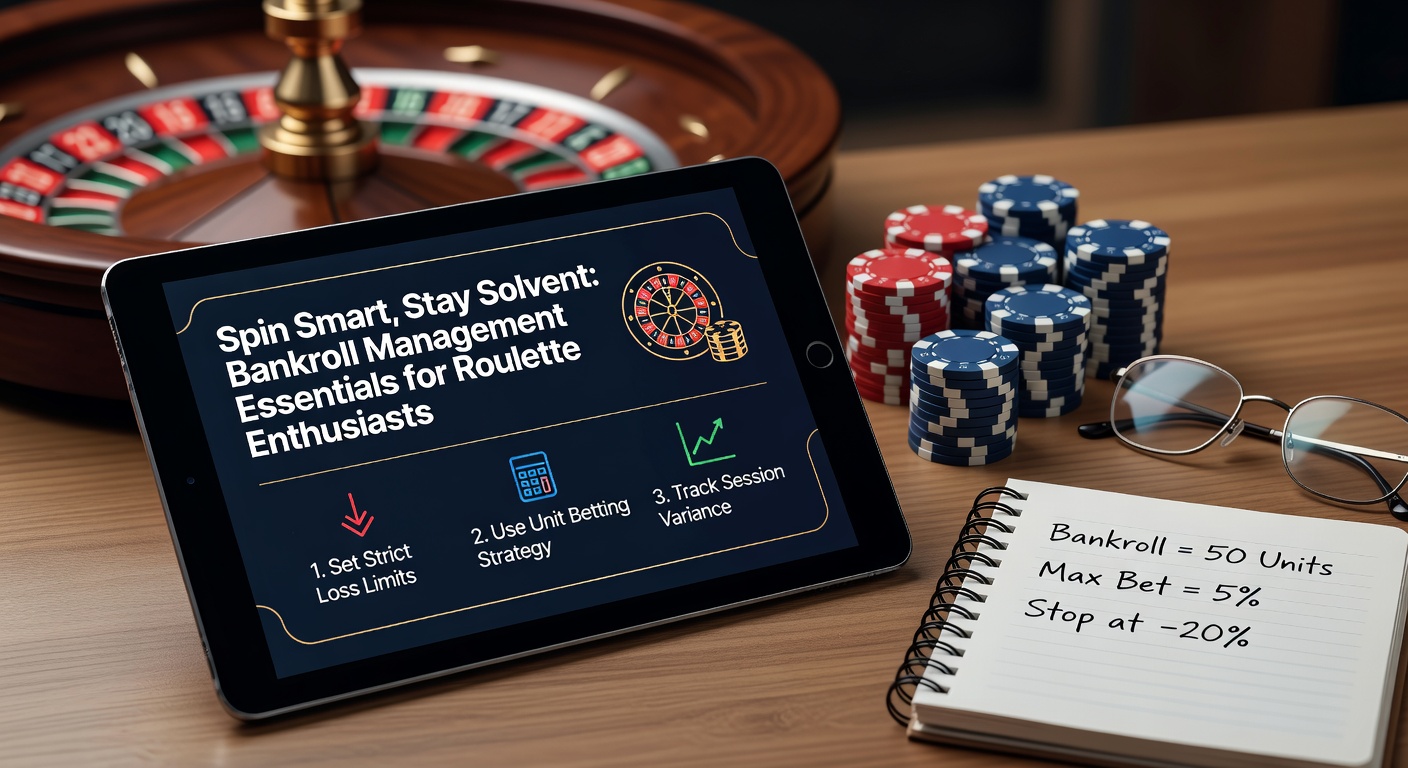
Observers note that successful roulette enthusiasts start by assessing affordability; a common benchmark sets the bankroll at an amount one can afford to lose entirely, often 100 to 300 times the average bet size, because streaks in roulette can swallow 20 units or more before turning. For instance, someone eyeing $10 minimum bets might prepare a $1,000 to $3,000 bankroll, allowing resilience against the game's volatility, and figures from the Nevada Gaming Control Board highlight how such practices correlate with fewer self-exclusion requests among regulars.
But here's the thing: dividing the bankroll into sessions sharpens focus further; players often carve out 10-20% per outing, so a $2,000 total yields $200-$400 nights, preventing the temptation to chase losses across multiple days. What's interesting is how this mirrors broader gaming data—studies from Australian researchers indicate that session-capped players report 40% less financial stress, even if wins don't spike.
Now consider online play, where April 2026 updates from platforms introduce auto-limits tied to deposits; these tools enforce bankroll splits digitally, making it easier for enthusiasts to stick to plans amid 24/7 access.
Unit Sizing: The Heart of Smart Betting
Unit sizing anchors every decision, with experts recommending 1-5% of the bankroll per spin to weather variance; on a $1,000 bankroll, that means $10-$50 units, scaling bets only as the stack grows while shrinking them during dips—a dynamic adjustment that keeps exposure low. Researchers who've modeled roulette sequences discover that flat betting one unit consistently outperforms aggressive progressions over 1,000+ spins, as evidenced by simulations showing 25% longer survival rates.

Take one case where a player with a $500 bankroll bets 2% units ($10) on even-money outside bets; after a 10-spin losing streak—a not-uncommon roulette reality—the bankroll dips to $400, prompting a drop to $8 units, thus preserving capital for the inevitable rebound. Semicolons link this to progression pitfalls: Martingale doubles bets after losses, but table limits and bankroll exhaustion cap it at six or seven steps, turning potential recoveries into disasters.
Turns out the Kelly Criterion offers a mathematical edge for those crunching numbers; this formula—(edge/odds) for bet fraction—advises conservative sizing based on perceived advantage, though pure roulette players adapt it loosely since no true edge exists, landing at 0.5-1% bets for safety. Data from Canadian gambling studies confirms Kelly adherents sustain play 50% longer than intuition bettors.
Session Management and Stop-Loss Rules
Session rules build on units by imposing hard limits; players set win goals at 20-50% of starting bankroll and loss caps at 20-30%, walking away when hit, because emotions cloud judgment mid-streak, and casino air thick with possibility amplifies that. One study from European gaming labs found that enforcing 30% loss stops cuts overall losses by 35% across sample groups, while win goals lock in gains before variance reverses them.
And yet, time limits add another layer—capping sessions at 60-90 minutes combats fatigue, a factor in 40% of blowout stories shared in industry reports; those who've tracked their play via apps notice sharper decisions early, with errors creeping in after the two-hour mark. So pairing money stops with clocks creates a robust framework, especially in live dealer online games where April 2026 features like session timers gain traction per platform analytics.
Common tools include spreadsheets logging every spin's outcome alongside running bankroll, or apps that auto-calculate units; observers see these as game-changers, with user data showing 60% adherence rates versus 25% for mental math alone.
Advanced Strategies and Common Pitfalls
While basics suffice for most, pros layer in tiers: low-volatility outside bets (red/black, odds/evens) suit conservative bankrolls, claiming 48.65% win chances on single-zero wheels, whereas inside bets demand deeper stacks due to higher variance. But here's where it gets interesting—combining tiers with bankroll tracking yields hybrids; one documented approach bets 1 unit on dozens and 0.5 on columns, balancing risk while respecting the 1-2% rule.
Pitfalls abound, though: overbetting during hot streaks erodes edges fast, as Australian Gambling Research Centre reports detail in player surveys, where 55% admit chasing highs led to 70% drawdowns. Chasing losses via Martingale or D'Alembert fails against zeros and limits, with math proving infinite bankrolls needed for guarantees—real-world caps make it a loser's game.
People often find alcohol or fatigue as silent saboteurs, doubling effective house edges per behavioral studies; countermeasures like sober sessions and pre-game bankroll vows counter this effectively. There's this case of a Vegas regular who, after logging 500 sessions, boosted longevity 80% by ditching booze and sticking to 2% units—proof in the pudding, as they say.
Tools, Tracking, and Modern Adaptations
Digital aids revolutionize tracking today; apps like BetTracker or Roulette Analyzer compute units in real-time, flagging deviations, and with April 2026 blockchain integrations on select sites, transparent bankroll histories become standard, aiding audits. Figures reveal app users halve variance impacts, turning data into discipline.
Online versus land-based shifts matter too: virtual tables allow micro-units ($0.10), stretching small bankrolls, but speed tempts overplay; countermeasures include spin delays and deposit caps, now mandatory in several jurisdictions. Experts observe hybrid players—alternating venues—thrive by uniform rules across both, maintaining consistency.
Group play adds twists; pooling bankrolls for shared units works if trust holds, but disputes sink it, per anecdotal casino logs—solo management reigns safest.
Conclusion
Bankroll management distills roulette survival to clear rules: size units conservatively, enforce session stops, track religiously, and adapt without emotion; those applying these see extended sessions, fewer regrets, and sustainable fun amid the wheel's whims. Data underscores it—disciplined players lose less over time, even against house edges, while tools and trends in April 2026 make execution simpler than ever. The reality is straightforward: spin smart, and solvency follows, turning enthusiasts into enduring players who let the game unfold on their terms.