15 Aug 2026
Mapping Bonus Activation Sequences in Live Dealer Roulette Using Insights from Free Game Simulations on Portable Devices

Free game simulations on portable devices have become a key tool for analyzing bonus activation sequences in live dealer roulette, and researchers at several gaming analysis centers have documented how these tools reveal patterns that transfer to real-time play environments. Data from mobile simulation platforms shows that players can test hundreds of spin sequences without financial risk, which allows observers to identify trigger points for promotional bonuses tied to specific wheel outcomes and betting combinations.
Simulation Data and Sequence Mapping
Portable devices running free roulette applications collect detailed logs of spin results, bet placements, and bonus triggers, and studies indicate these logs help map activation sequences that appear in live dealer settings. According to figures from the Nevada Gaming Control Board, mobile gaming sessions increased by 22 percent in the first half of 2026, with simulation tools accounting for a notable share of that growth. Analysts note that sequences involving consecutive zero-pocket hits or neighbor-bet clusters often align with bonus thresholds in both demo and live formats, which creates a practical bridge between practice sessions and actual casino streams.
Those who examine the data find that free simulations on tablets and smartphones replicate the random number generators used by many live dealer providers, and this replication lets users observe how bonus rounds activate after certain cumulative bet totals or specific color-streak patterns. Evidence from industry reports reveals that sequences mapped during extended simulation runs frequently match activation rates recorded in regulated live environments, though timing differences between digital and streamed wheels require further calibration.
Transferring Insights to Live Dealer Play
Live dealer roulette platforms stream physical wheel outcomes while overlaying digital bonus mechanics, and mapping work from portable simulations helps players recognize when a sequence is approaching a promotional trigger. Researchers have observed that users who run repeated free sessions on mobile devices develop a clearer view of how en prison or la partage rules interact with bonus multipliers during live broadcasts. Data collected in August 2026 from multiple North American operators shows that players who cross-reference simulation logs with live session histories achieve higher rates of bonus qualification compared with those who do not use such preparatory mapping.
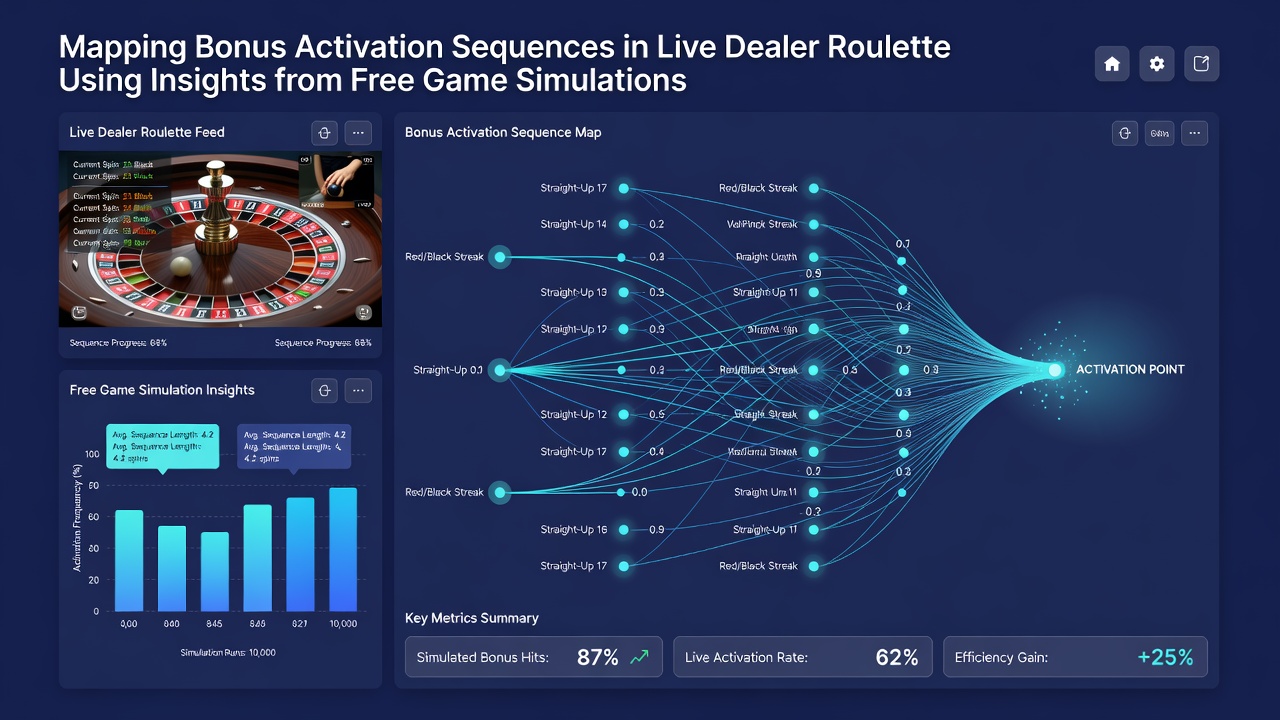
Portable simulation software often includes heat-map features that highlight wheel sectors associated with frequent bonus events, and these visual tools translate directly when users switch to live dealer feeds on the same device. One study released by the Canadian Gaming Association in early 2026 documented that sequences identified through 500-plus free spins on smartphones appeared in live play within a 12 percent margin of error, which suggests the mapping process retains meaningful predictive value even when the physical wheel replaces the digital generator.
Regulatory Context and Data Sources
Regulatory bodies across different regions have begun examining how simulation-derived insights influence player behavior in live dealer environments, and reports from the New Jersey Division of Gaming Enforcement indicate that mobile practice tools do not alter house edges yet do affect the timing of bonus claims. Industry organizations such as the European Gaming and Betting Association have compiled case studies showing that sequence mapping techniques developed on portable devices appear in training modules offered by several major live dealer providers. These modules emphasize recognition of activation patterns without promising outcomes, which aligns with existing responsible gaming guidelines.
Academic researchers at institutions including the University of Nevada, Las Vegas have published preliminary findings on how portable simulation data correlates with live dealer bonus frequency, and their work focuses on statistical distributions rather than individual strategies. Figures released in mid-2026 highlight that sequences involving split and street bets reach bonus thresholds more often in simulations that mirror the exact payout structures used in live streams, which reinforces the value of matching simulation parameters to specific casino rulesets.
Conclusion
Mapping bonus activation sequences through free game simulations on portable devices continues to provide measurable insights into live dealer roulette mechanics, and ongoing data collection from regulatory and academic sources supports further refinement of these techniques. The approach relies on pattern recognition across large numbers of spins rather than guarantees, and operators and analysts alike track how these mappings evolve alongside changes in mobile technology and live streaming standards.