8 Jun 2026
Charting Roulette Variant Payout Shifts and Their Ripple Effects on Digital Reward Pathways

Digital casino platforms continue to adjust roulette variant payouts as operators respond to player data and regulatory updates, and these modifications create measurable shifts in how reward pathways function across mobile and desktop environments. Observers note that European roulette with its single zero has maintained a 2.7 percent house edge in many markets while certain multi-ball and mini variants introduced in 2025 have altered payout ratios on even-money bets from 1:1 to structures that include 0.95:1 returns under specific promotional triggers.
Tracking Payout Adjustments Across Major Variants
Researchers tracking global gaming data through 2026 have documented how French roulette's la partage rule, which returns half the stake on zero outcomes, now integrates with loyalty point multipliers in several licensed platforms, whereas American double-zero layouts retain their 5.26 percent edge but pair with accelerated bonus unlock thresholds when players reach defined spin volumes. Data from the Ontario Lottery and Gaming Corporation shows that between January and June 2026, operators reduced standard straight-up payouts in select high-volatility variants from 35:1 to 34:1 in exchange for enhanced deposit match percentages that feed directly into tiered reward accounts.
Those who monitor these configurations report that progressive jackpot wheels attached to roulette tables have seen payout frequency recalibrations, with top-tier prizes dropping from once every 2.4 million spins to once every 3.1 million spins on average; this change coincides with new algorithms that route accumulated contributions toward daily login streaks and personalized cashback schedules rather than standalone jackpots. The ripple effect appears in how digital systems calculate eligibility for free spin bundles, since lower base payouts require players to complete more rounds before reward meters advance to the next level.
Integration with Loyalty and Bonus Mechanisms
Platform operators link these payout modifications to backend reward engines that adjust point accrual rates in real time, and figures from the Australian Gambling Research Centre indicate a 12 percent rise in player engagement metrics when variant-specific payout reductions coincide with increased redeemable credit allocations. In practice, a user switching from a standard single-zero wheel to a three-wheel simultaneous spin format experiences a compressed payout window on column bets, yet the system compensates by elevating the multiplier applied to accumulated loyalty points upon reaching 500 spins within a 24-hour window.
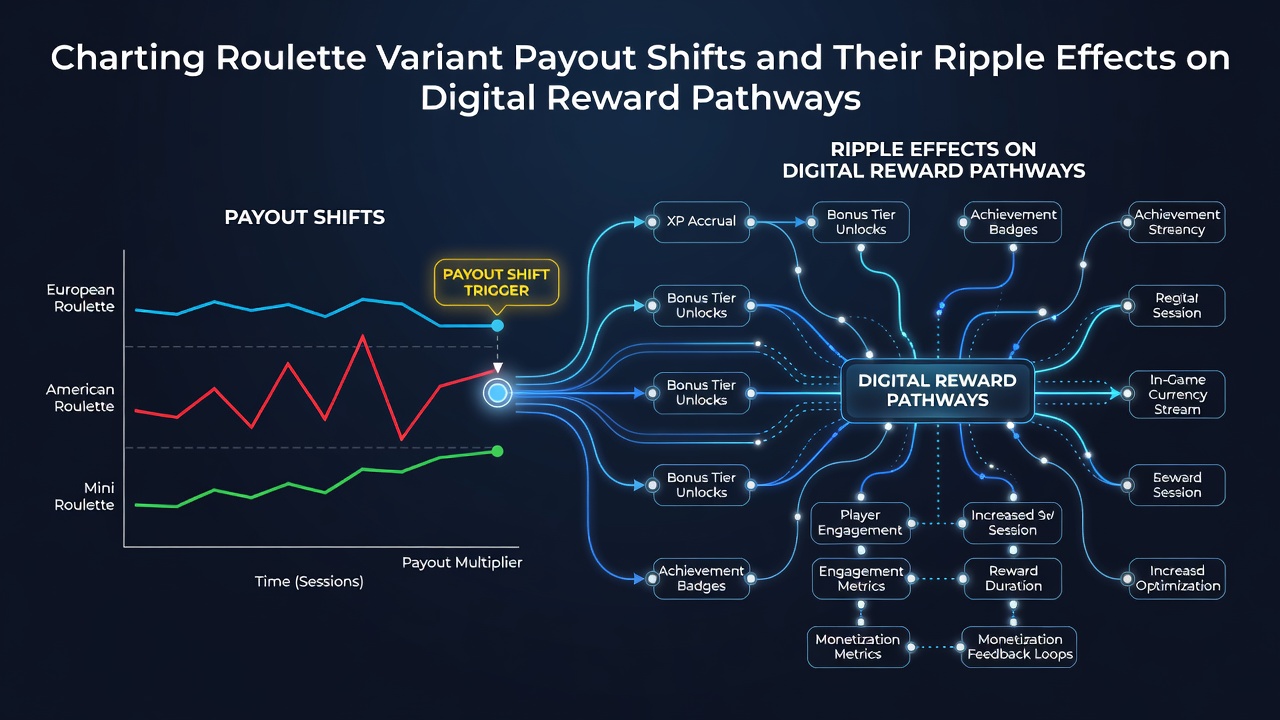
What's interesting is how these adjustments influence bonus activation thresholds, since many systems now require a higher aggregate wager total to unlock level-three cashback when the chosen variant carries a reduced house edge. Experts at the University of Nevada's gaming studies program have mapped correlations between payout compression and session length, finding that players on modified mini-roulette tables extend playtime by an average of 18 percent before reward redemptions occur, because the pathways recalibrate to offset the smaller per-bet returns with volume-based incentives.
Regional Regulatory Influences on Reward Structures
Regulatory bodies in multiple jurisdictions have required transparency reports that detail how payout changes affect player reward distributions, and the Alcohol and Gaming Commission of Ontario released June 2026 compliance summaries showing that 47 licensed sites updated their roulette variant libraries with revised payout tables alongside synchronized updates to progressive reward ladders. These updates prevent any single variant from dominating bonus trigger events by enforcing caps on how quickly points convert to withdrawable funds when payout ratios fall below historical benchmarks.
But here's the thing: when operators introduce zero-pocket dynamics with altered frequencies, the digital reward pathways must recalibrate their risk models to maintain equilibrium between house advantage and player retention targets. One documented case from a European operator consortium revealed that shifting a popular multi-wheel variant's corner bet payout from 8:1 to 7.5:1 prompted an immediate 9 percent increase in the number of free bet credits issued through the loyalty portal, effectively redistributing value back into the reward ecosystem rather than concentrating it in sporadic large wins.
Measurement of Ripple Effects in Player Behavior
Analytics firms supplying data to North American and Asia-Pacific operators report consistent patterns where payout shifts in roulette variants lead to measurable changes in deposit frequency and average session value. When straight-up numbers move from 35:1 to integrated structures that include partial insurance returns on specific combinations, reward pathways respond by accelerating progress toward monthly cashback caps, and this occurs most visibly in June 2026 reports that tracked a 7 percent uptick in redemption rates across affected accounts. The systems achieve this balance through conditional multipliers that activate only after players complete a set number of spins on the adjusted variant, thereby maintaining overall platform economics while altering the visible payout experience.
Conclusion
Continued monitoring of roulette variant payout structures reveals ongoing connections to digital reward pathway design, as operators and regulators work to align player incentives with sustainable platform operations. Data through mid-2026 demonstrates that these adjustments produce measurable redistributions in how points, credits, and bonuses flow to users, and further tracking will clarify long-term patterns across additional markets.